
Heat and grit shape the choice here as much as noise does. A chain soaked in oil collects the dust the wind brings in, a west-facing garage cooks the electronics in July, and RV bays with tall doors need an opener built for them. Here's how the options compare, and why the door gets checked before any opener goes up.
Tell us what the door is doing. Free estimate, written down, before the first tool comes out.
Picture the opener on the ceiling as three parts: a motor near the back wall, a long rail, and a trolley riding that rail with an arm bolted to the door's top section. The drive is simply what drags the trolley: a chain, a steel-corded belt or a threaded rod.
Wall-mounted openers skip the rail and turn the torsion bar from beside the door, which keeps the ceiling clear and suits tall RV doors where a long rail would be awkward.
In town we put belts on most attached garages, chains on detached garages and shops, and wall-mounted or heavy-duty units on RV bays and tall shop doors.
Garages near downtown with low ceilings are another place wall-mounted units fit well.
For a detached garage or a shop, a chain is still a practical choice. For an attached garage, especially a newer one with bedrooms beside it, we usually recommend a belt.
Heat matters too. A west-facing garage on a July afternoon gets hotter than the air outside, and opener boards last longer when the motor isn't straining against an unbalanced door.
In a detached garage the noise hardly matters, but grit does, so a chain there gets its tension and lubrication looked at on every visit.
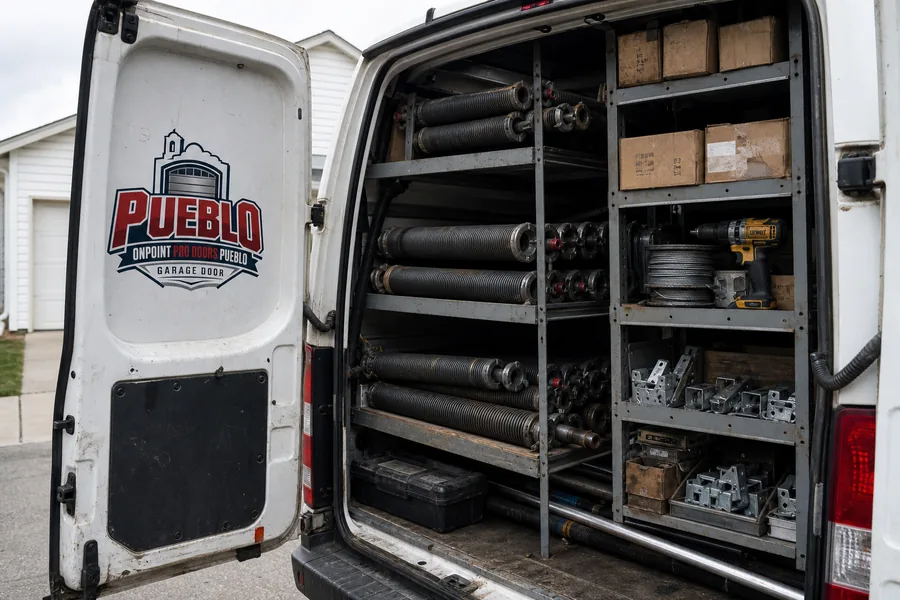
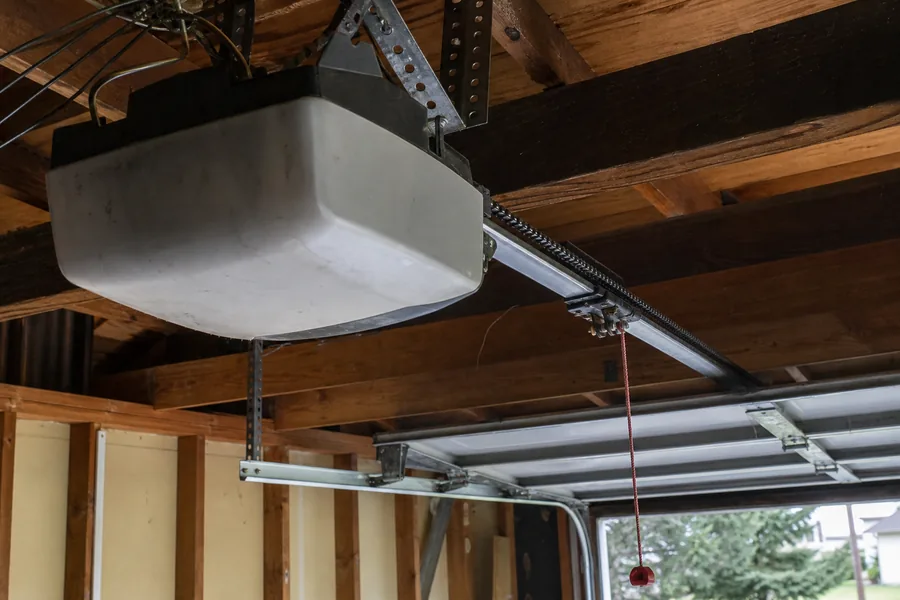
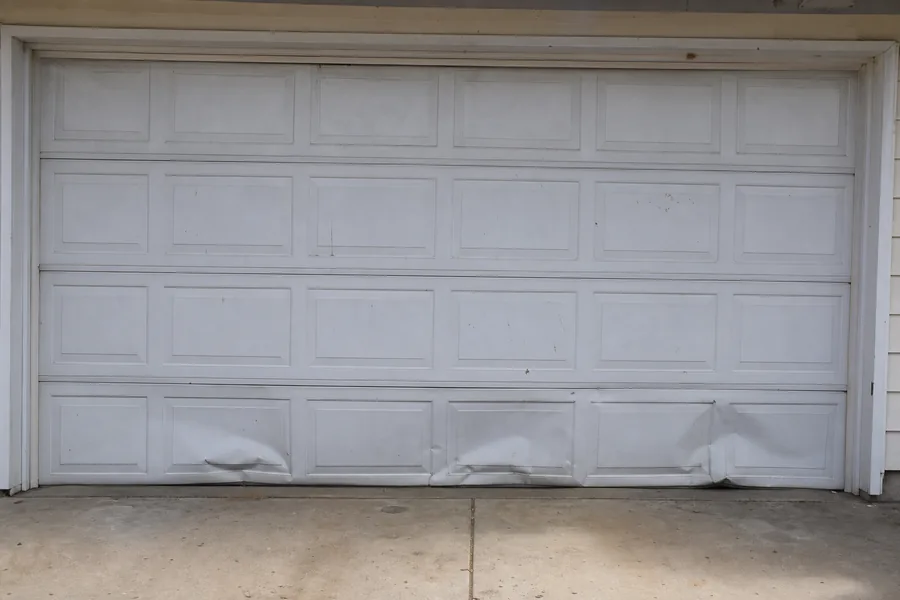
Every new opener, same steps. Houses, shops and RV bays alike.
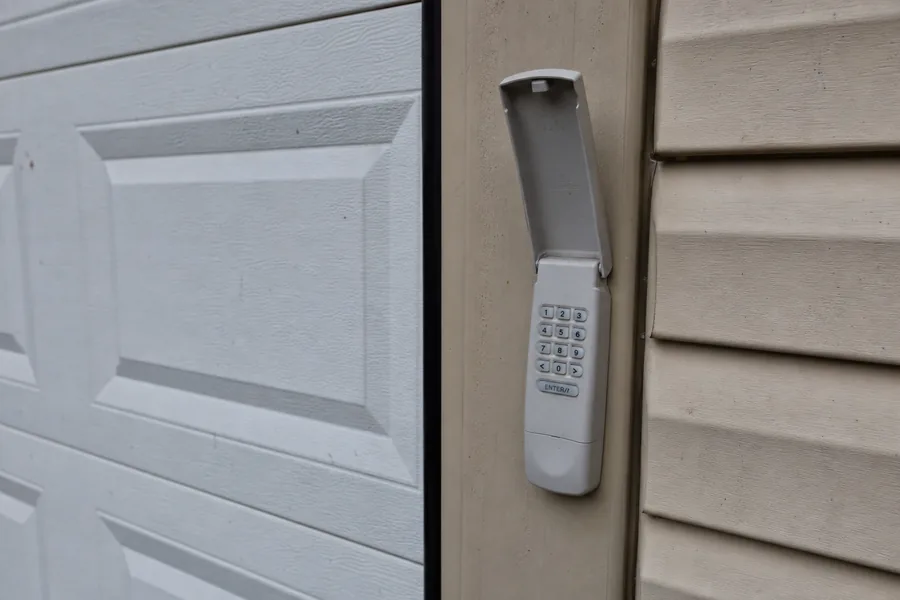
Today's LiftMaster, Chamberlain and Genie openers link to Wi-Fi: the phone shows whether the door is up, closes it from anywhere and pings you when it moves.
On a property with a house door, a shop door and an RV bay, having all three on one app is the feature people end up liking most.
A backup battery lets the opener run a number of cycles through an outage, which matters when a summer storm cuts the power just as the truck needs to leave.
Surge protection at the opener's outlet is worth adding in storm season, since surges take out opener boards.
Longer drives out west mean more time waiting if the power is out, so backup matters more there.
Most people ask about the LiftMaster belt drives with backup batteries and Wi-Fi, or Genie's quieter belt units. Both are good; longevity depends on the door underneath. We install both and explain the difference on site.
Horsepower is mostly a marketing number. Balanced single doors need little; heavy doubles, insulated doors and tall RV doors need more; no motor fixes a door that's out of balance.
Screw drives still turn up in older garages near downtown. Grit in the threads makes them noisier every year, and they're usually replaced rather than rebuilt.
A good share of new-opener calls in the county end without a new opener. The unit is straining because a spring has worn thin, a cable is frayed, or grit has turned the grease on the rollers and drums into paste. Fix those and the old opener often keeps going.
The first hard freeze is when this shows up most. A spring the summer wore thin gives out on a cold morning, the opener strains against a dead-weight door, and the opener gets blamed.
West-facing garages add heat to the mix: an opener straining in a July oven burns out boards years early.
The estimate is written down and free, and it comes before any decision about the opener.
"Belts are too weak for big doors." Steel-corded belts are rated for heavy doubles. Springs set the limit.
"Go bigger on the motor." A struggling opener is telling you the door is out of balance; a bigger motor just hides it for a while.
"Wi-Fi means a monthly bill." The basic apps are free; paid tiers add things like video storage.
"Keep the old rail." New openers come with their own rail, and the whole assembly goes up together.
Very much so in a bedroom sharing a wall with the garage. Chains clatter through the studs; belts barely hum. In a detached shop it hardly matters.
Nearly always, once the door is balanced and the grit is cleaned off the rollers and drums. Springs and hardware get looked at first.
Most of an afternoon, with every remote and vehicle paired and the reverse tested. Spring or roller work, if needed, usually happens on the same visit.
A wall-mounted unit or a heavy-duty opener rated for the door's height and weight, and both need torsion springs, which most RV bays have. Tall shop doors get the same treatment.
Yes, written down, anywhere in the county, and it covers what the door needs and which opener fits. Shop and RV doors can be included.
Often. A dead opener with the truck shut inside gets treated as urgent. Say whether it's the house, the shop or the RV bay.
Sunset Park to Rye, one call gets a two-hour arrival window, and the technician calls from the road. Weekend installs are possible.
Free estimate. Throughout Pueblo County, including Belmont, Sunset Park, Bessemer, Pueblo West, Colorado City, Avondale, Boone, Rye, Fountain.
Tell us what the old one is doing and which doors you have, and you'll get an arrival window. The visit and the written estimate are free anywhere in the county. Photos of the old opener help.
Would rather call? Call (719) 662-8141.
Brand, age and what it's doing. Estimates are free and written down.