
Around here the garage often holds more than the car: a welder, a table saw, a boat, an RV worth more than everything else on the lot. Out on the big lots the shop sits far from the street, and near downtown the old detached garages open onto alleys. Here's how we close the easy ways in, from free habits to hardware that goes in during one visit.
Tell us what the door is doing. Free estimate, written down, before the first tool comes out.
Hardly anyone breaks a garage door. They borrow a remote from a truck parked out front, punch in a keypad code that hasn't changed in years, reach the red release cord through the top gap, or walk through a house door nobody bothers to lock.
Every one of those can be closed, some with a habit and some with a part.
On the big western lots the shop or RV bay often sits a long way from the house and the street, which is exactly why it gets targeted. Near downtown, the old detached garages open onto alleys where nobody's watching.
Summer evenings bring their own habit: the big door left up for air while everyone's out back. Phone alerts and an auto-close timer catch the times it's forgotten.
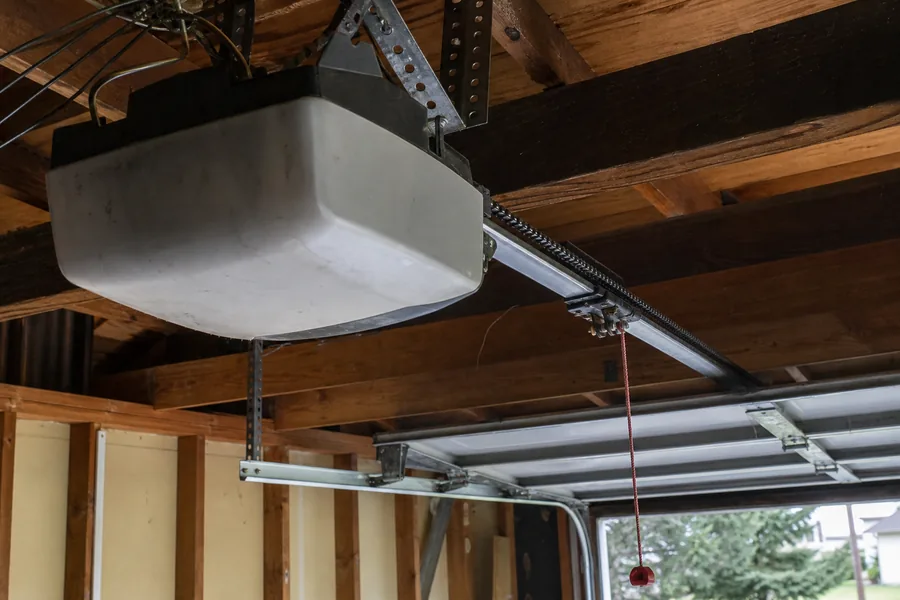
It's there so the door can be freed and lifted by hand when summer storms cut the power, and it must stay. On some doors, though, it hangs where someone outside could get at it. Wind storms knock the power out too, so everyone in the house should know where the cord is.
A small guard around the trolley fixes that without changing anything inside: pull the cord in an outage and it works as always, but nobody outside can get to it. It's the first upgrade we suggest on most garages.
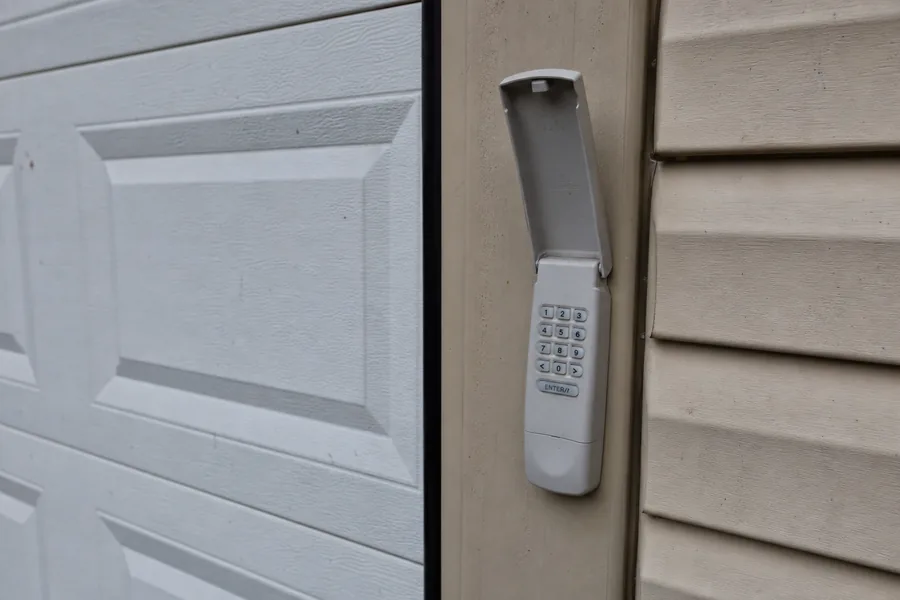
Four habits that need no parts, then five pieces of hardware we install.
Rolling-code openers, standard since the late nineties, send a new signal each time. Older fixed-code units send one unchanging signal that can be recorded and replayed. Swapping out a fixed-code opener is the single biggest security improvement on this page. Many homes in older neighborhoods still run one.
A glance at the motor housing tells the technician which kind you have, and the written estimate spells out what a newer opener would involve.
Shop and RV-bay openers are often the oldest on the property, put up with the building and never replaced, so they get the same check.
Plenty of the brick ranches on the east side are on their original openers, and some of those are fixed-code units.
The checklist before a trip: remotes switched off at the wall, slide bolt in, remotes out of every vehicle, the house door deadbolted, alerts on, and someone nearby who knows you're away. Camping season and hunting season are when shops and RV bays sit empty longest.
Coming home, slide the bolt back out before touching a remote, so the opener doesn't fight a pinned door. An opener pushing against a bolted door can strip its gear.
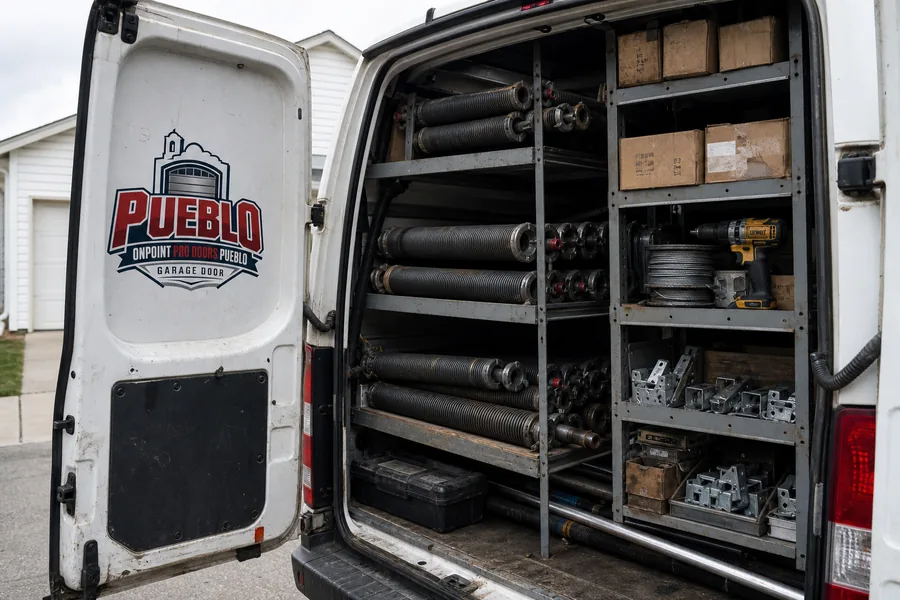
Release guards, slide bolts, deadbolts and solid slabs for the house door, windowless panels, Wi-Fi openers and retrofit modules, and rolling-code openers to take over from fixed-code ones, usually all in one visit.
Tall RV and shop doors get the same list, with openers sized for their height and weight.
Outbuildings with their own openers can get their own keypad codes, so a contractor working in the shop never has the house code.
We don't publish methods for getting into garages. What's above is the useful part, and the technician can point out which of the nine items your garage is missing.
"Down means locked." Not with a reachable cord, a remote in the truck and an unlocked kitchen door.
"Smart openers are a hacking risk." With a strong password you're safer, because every opening shows up on your phone.
"Nobody bothers with the shop." The shop is where the valuable tools are, and often the one door no one upgraded.
Yes. The guard only blocks the outside approach; from inside, the cord hangs and releases just as it always has. Nothing about daily use changes.
If it's rolling code, yes. If it's fixed-code, we'd suggest replacing it, and the technician can tell on the visit. Newer replacements usually include Wi-Fi alerts too.
On most tall sectional doors, yes. It mounts in the track, and the opener gets set so it won't strain against it. Motorhome owners away for weeks use them most.
It reads as frosted glass and still lets daylight in. A solid panel is the alternative, it keeps summer heat down, and it can be matched to the rest of the door.
Yes, written down, anywhere in the county. You hear what we recommend and why, and declining is always fine. Shop and RV doors go on the same estimate, and so does any side door.
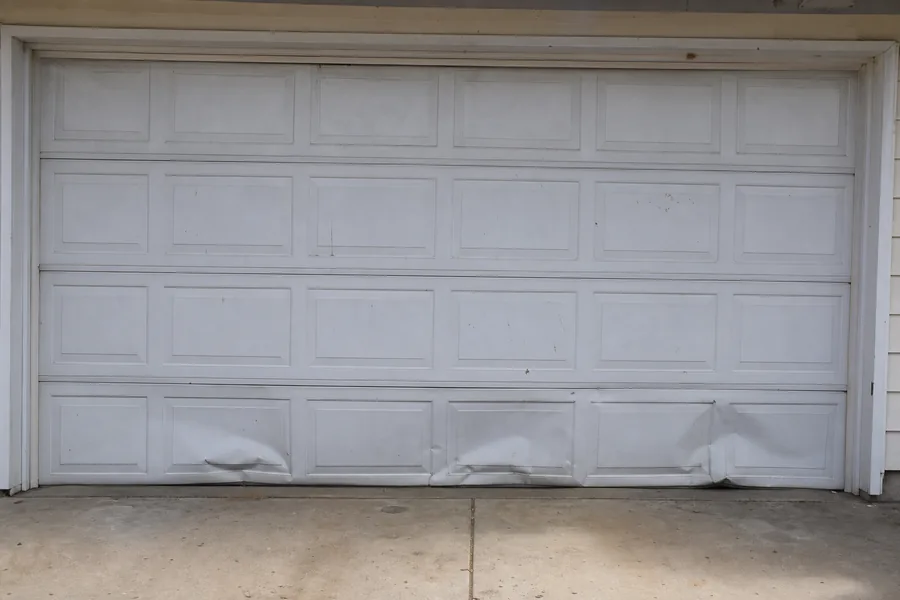
Often. These jobs are short, and a break-in on your street moves them up. Tell us if the door itself was damaged.
Northside to Avondale, one call books a two-hour arrival window, and the technician calls from the road.
Free estimate. Throughout Pueblo County, including Belmont, Sunset Park, Bessemer, Pueblo West, Colorado City, Avondale, Boone, Rye, Fountain.
Tell us what's worrying you and which doors you have, and you'll get an arrival window. The visit and the written estimate are free anywhere in the county. Shops and RV bays can be checked on the same visit.
Would rather call? Call (719) 662-8141.
The opener's age, and any shop, RV or side doors. Estimates are free and written down.