
The sun here is the first thing a new door has to deal with: it fades dark finishes, bakes the weatherstrip and turns an uninsulated garage into an oven by mid-afternoon. Wind and the odd hard freeze come next. The right door handles all three. Measuring and the written estimate are free.
Tell us what the door is doing. Free estimate, written down, before the first tool comes out.
Dark doors look sharp on day one and suffer for it every afternoon: they soak up heat, and on a south- or west-facing garage the finish fades faster. Lighter colors and factory finishes made for strong sun keep their look longer. If you want a darker door, the finish matters more than the color itself, and it's easiest to decide with the actual sample panel held against your own wall in the afternoon light. If you'd like light through the door, see glass garage doors, including hail-tough polycarbonate panels. For older houses that want the carriage look, in real wood or wood-look steel, see wood and carriage garage doors.
Woodgrain textures on steel hide small dings from wind-blown grit better than smooth panels, which is worth knowing on an exposed lot.
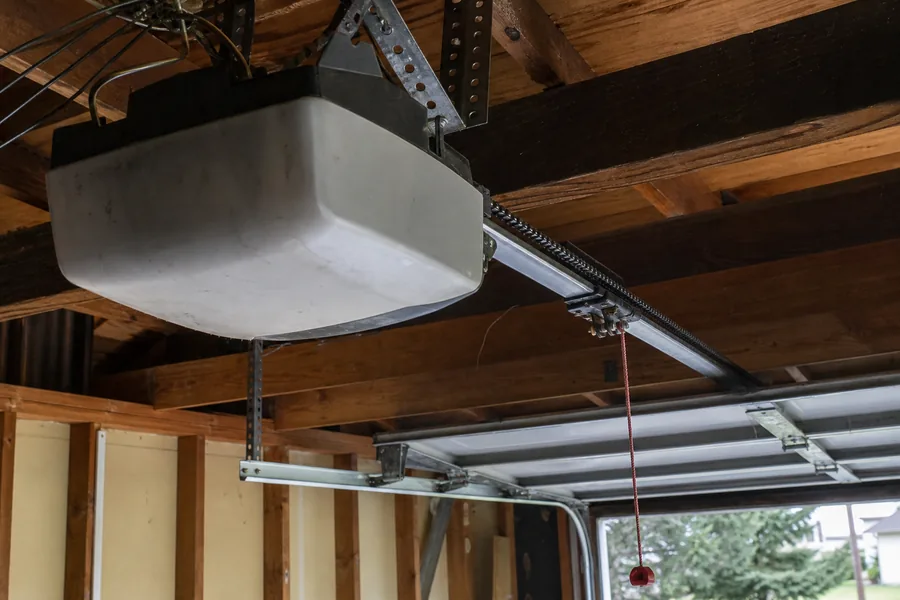
An attached garage facing the afternoon sun heats the rooms next to it and anything stored inside. A door with foam insulation sealed between two steel skins cuts that down noticeably and also helps on the winter nights when the temperature drops fast. It's stiffer too, so it rattles less in the wind.
The bottom seal and the side weatherstrip go in new with the door. Sun-baked strips crack and curl, and gaps around a good door undo most of what the insulation is for.
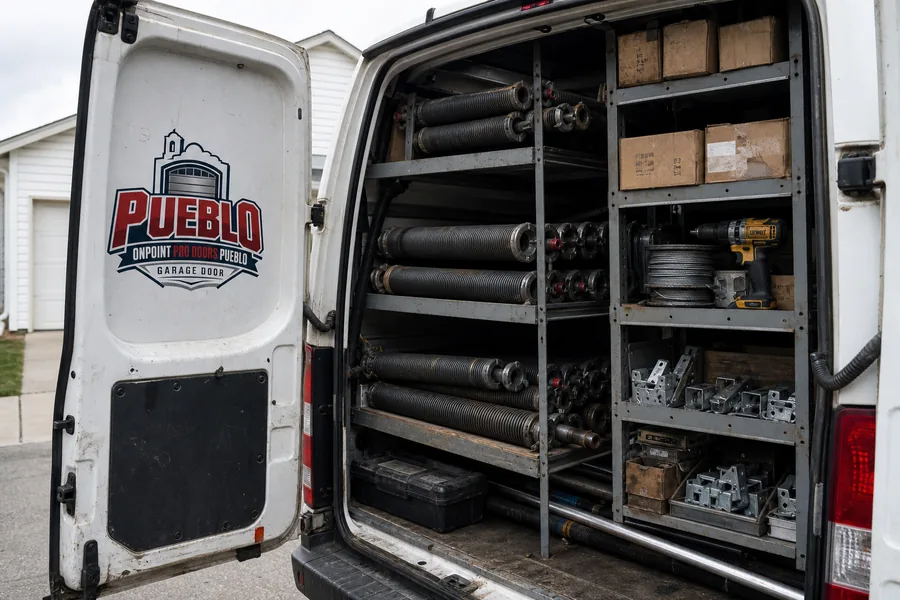
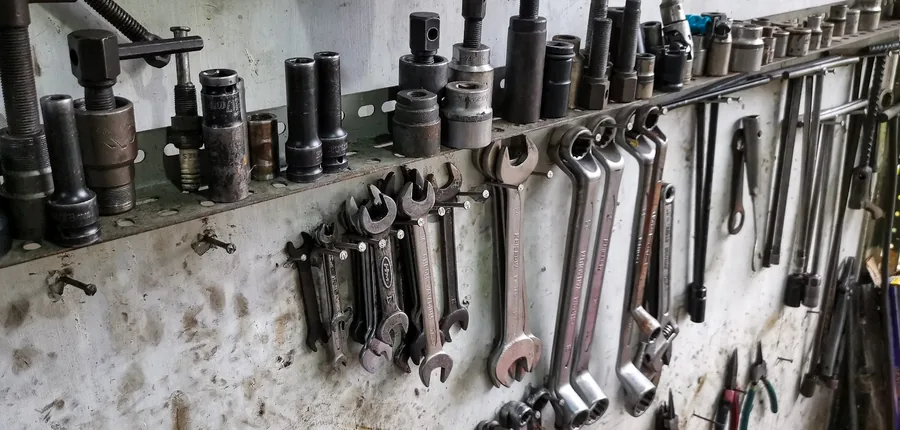
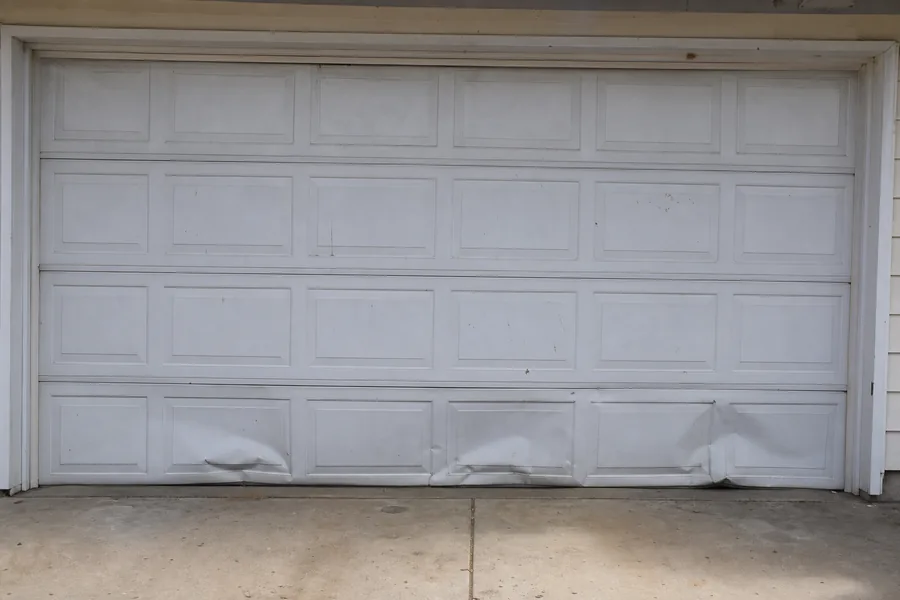
Spring winds push hard on a wide garage door. Double doors come with steel struts bolted across the sections, and on an open lot every strut the maker specifies should be there. The tracks are fastened into solid framing and braced at the back so the whole assembly stays square in a gust.
Once the door is hung, the springs are set to its real weight, not copied from the old door. That's what makes it feel light, stay put at halfway and last.
Not every opening here is standard. Older detached garages can be narrower or lower, stucco ranches sometimes have a beam or a light fixture right where the tracks want to run, and shop buildings have openings sized to whatever the builder had in mind. The measure covers the opening, the headroom, the room at each side and the depth back into the garage, and notes anything in the way, so the door that arrives fits without surprises.
Low-headroom track, or moving the springs to a different position, solves most tight spots. If the framing around the opening needs work first, that's listed separately.
From measuring to handing over the remotes.
Shops and RV garages need doors taller than a house garage, often with windows so there's light inside without leaving the door open. Taller doors get heavier-duty tracks and hardware and springs sized for their weight and height, and the operator is matched to the door so it isn't straining.
If the shop is heated or used as a workspace, insulation earns its place; if it just holds the boat and the camper, the lighter uninsulated door makes more sense.
Brick and stucco ranches usually look best with a clean flush or ribbed panel and a simple window row, while the older homes near downtown suit carriage-style doors with square-top windows. Neither changes how the door is installed; it's purely about what looks right from the street.
Ranches in Belmont, Sunset Park and El Camino, older homes in Mesa Junction, Bessemer and the Northside, and shops and RV garages toward Pueblo West. Colorado City, Avondale and Boone are on the same schedule.
The measure comes to you, wherever that is.
Measured on site. Never ordered from a guess.
Springs set to the new door. After it's hung, by weight.
Old door hauled off. Nothing left behind.
Handed over working. You watch it balance, reverse and answer every remote.
Lighter colors and finishes made for strong sun fade least. If you want a dark door, choose the finish carefully.
For an attached garage in the afternoon sun, yes; it keeps the garage and the rooms beside it cooler and helps on cold nights.
Yes. Taller doors get stronger track and hinges, and springs picked for their height and weight.
Maybe. If it has safety eyes, runs smoothly and isn't straining, it usually stays; an older one without eyes or with a worn gear is better replaced while the door is new. You'll know which before ordering.
Usually a single visit from start to finish, including taking the old door away and testing the new one.
No. The measure and the written estimate are free, and nothing is ordered until you say so.
Tell us where the house is and the look you're after, by phone or through the form. Samples come along on the measuring trip.
Free estimate in town and across the county.
Describe it and you'll hear an honest opinion on whether it's a today job or not. Free estimate wherever you are.
Would rather call? Call (719) 662-8141.
Tell us what the door is doing. Free estimate, written down, before the first tool comes out.