
Heat and dust are harder on openers here than the cold is. Boards run hot in a closed garage, keypads fade in the afternoon sun, and wind-blown grit clouds the safety eyes. The technician works out which one you're dealing with before anything is replaced, and the estimate is free.
Tell us what the door is doing. Free estimate, written down, before the first tool comes out.
A west-facing attached garage can get very hot by late afternoon in summer, and the opener hangs near the ceiling where that heat collects. Logic boards and the capacitor that starts the motor age faster in it. The first sign is often an opener that runs fine at breakfast and gives up by dinner, or hums without moving until the garage cools down after dark. If you'd also like alerts and app control, see smart garage door openers for house, shop and RV doors.
Heat also drains remote batteries faster and warps the flimsier plastic remotes, so a remote that works one day and not the next gets a battery check before anything else. If that isn't it, the receiver on the opener gets a look.
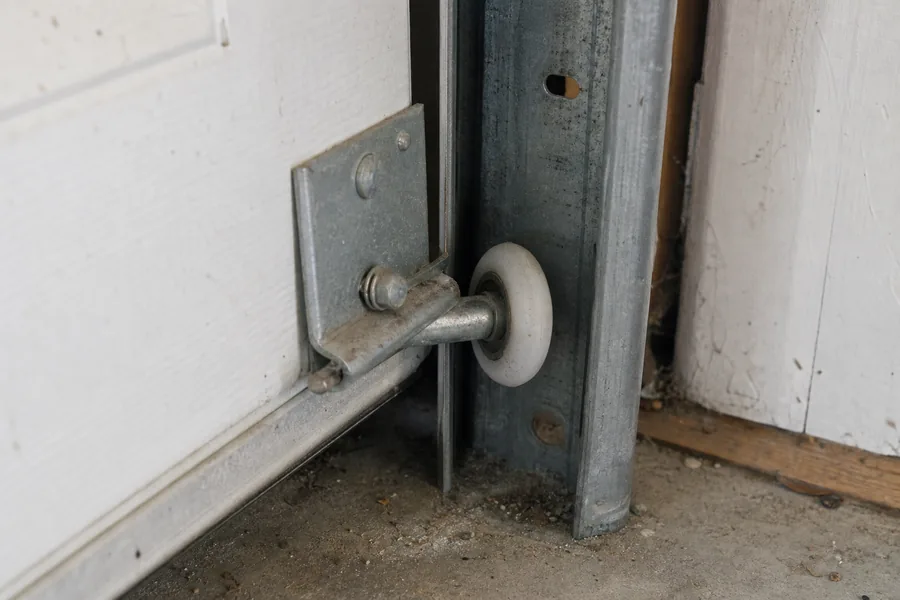
Those two little sensors low on the door frame have to see each other or the door won't close. Wind pushes fine dust under every door here, and it settles on the lenses until the beam is too weak to cross the opening. The door starts down, stops and climbs back up, usually worse in the evening when the light is low. Cleaning and realigning is often the entire job; a lens that stays cloudy or a bracket that keeps drifting gets replaced.
Heat does the damage that damp does in other places: the jacket on the thin sensor wire turns brittle at the staples, one eye loses power, and the door refuses to close. A new run of wire, held with clips instead of staples, puts it right.
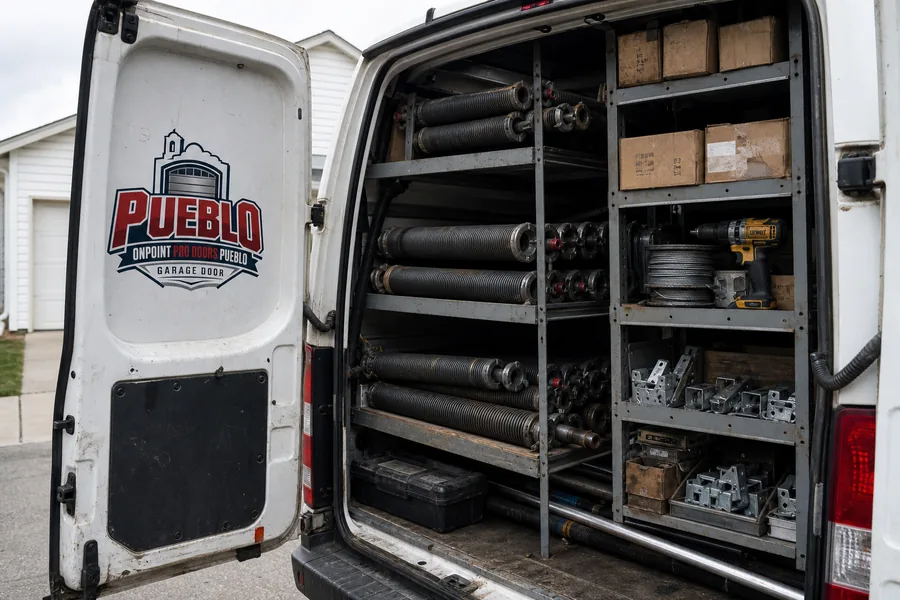
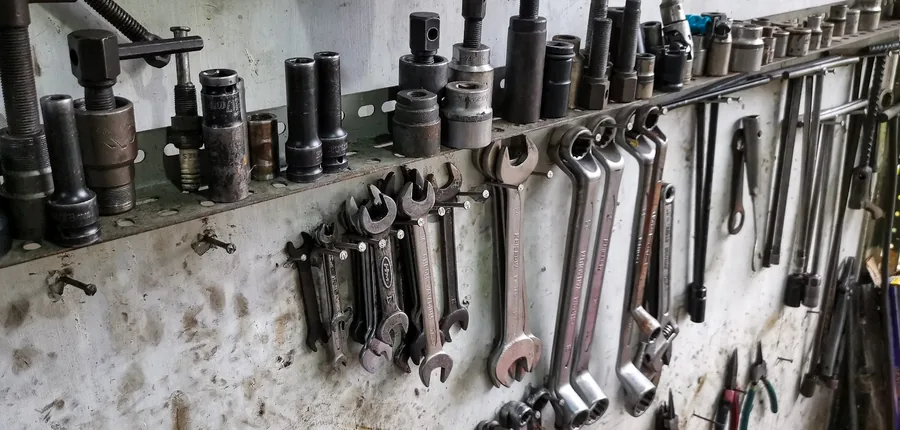
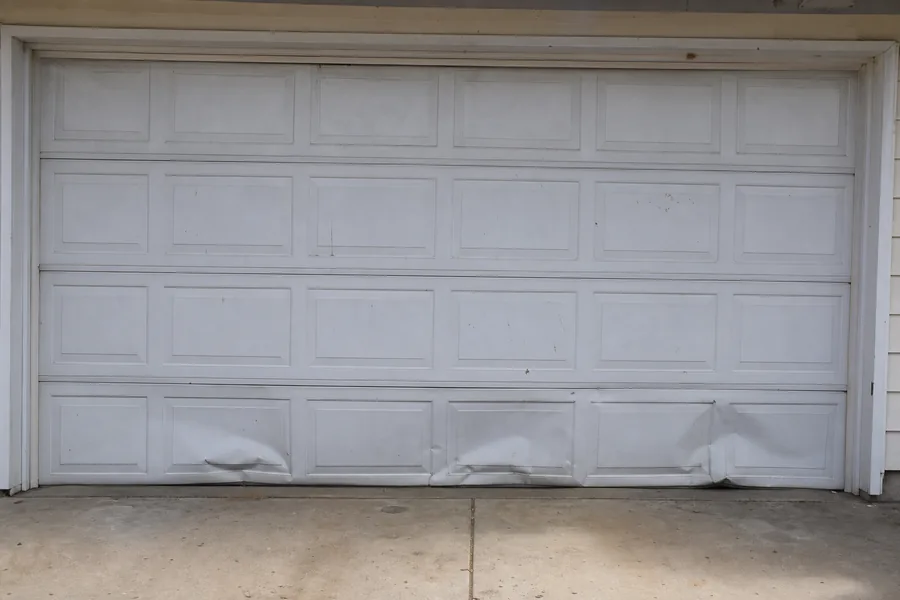
A tall, heavy shop door needs an opener rated for it, and many have whatever was on the shelf the day it was bought. Those units strip gears and burn out motors trying to move more door than they were built for. Before a new opener is suggested, the springs get checked, because a shop door that's properly balanced is light enough for most openers to handle.
For the tallest doors, a wall-mounted jackshaft opener beside the door or a commercial-duty trolley unit is the right tool, and you hear why before anything is ordered.
Door first, then power, then the opener itself.
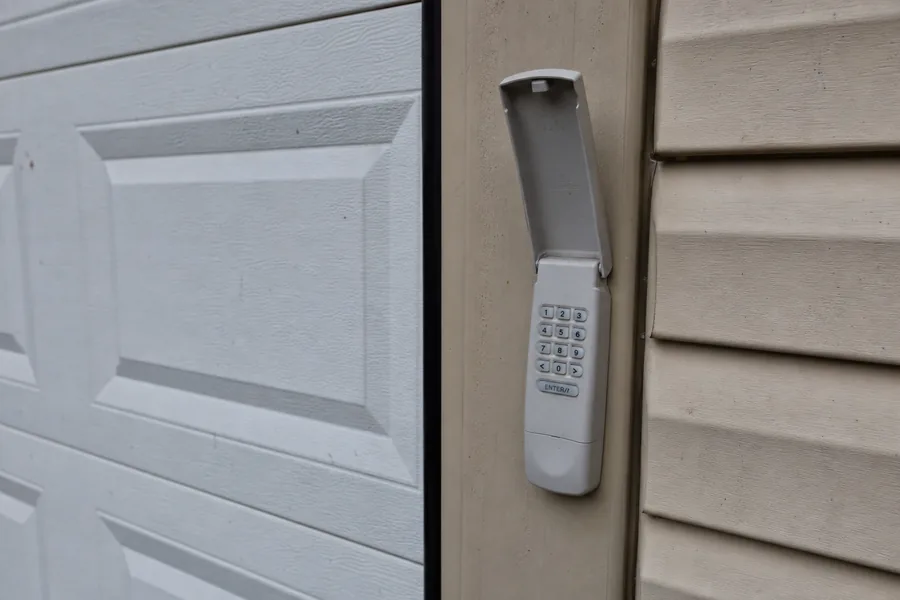
An outdoor keypad on a west-facing wall takes the full afternoon sun, and after a few summers the numbers fade, the rubber cracks and the buttons stop registering. A new keypad takes a few minutes to mount and pair, and setting a new code retires the old one, which after a few years tends to be known by more people than you'd think.
Phone control is the other route, built into newer openers or added with a small module: the door can be opened for a delivery or checked from work, and battery backup keeps it running when the power drops.
Most openers here are worth keeping. Gears, start capacitors, logic boards, sensors and remotes are all replaceable parts, and a unit that gets them can run for years more. The exception is an opener so old that its board is no longer made and its remotes still use the old fixed codes that anyone with the right gadget can copy.
For that one, a new belt-drive or jackshaft unit with modern encrypted remotes and a battery that carries it through outages makes more sense, and you hear both options, side by side, before choosing.
Belmont, Sunset Park, Bessemer, Mesa Junction, the Northside and El Camino, and out to Pueblo West, Avondale, Boone, Colorado City and Rye. Opener parts for the common brands ride along every day.
Give us the street and the arrival window you get is a real one.
Heat ages boards. An opener that quits in the late afternoon is telling you something.
Dust closes nothing. Clouded safety eyes stop the door from closing at all.
A heavy door beats any opener. Balance the door before blaming the motor.
Old codes travel. A new keypad code is worth setting every few years.
Heat is the usual suspect. Boards and start capacitors in a hot garage fail as they warm up. The technician tests the unit and replaces the part that's going.
The safety eyes can't see each other: dust on a lens, a bumped bracket, or a damaged wire. Cleaning, realigning or rewiring usually fixes it on the visit.
A replacement keypad is a short job, and it's a good moment to set a new code.
Either the door is out of balance or the opener is too small for it. The springs are checked first; if the opener is undersized, a heavier-duty unit is recommended.
Yes. Newer openers have it built in, and most older ones can take an add-on module.
It is. The door and the opener get checked and the findings written down before any work.
One call, a two-hour window, and a call ahead from the technician. That's the routine across Pueblo, Sunset Park and Pueblo West.
Free estimate. Throughout Pueblo County, including Belmont, Sunset Park, Bessemer, Pueblo West, Colorado City, Avondale, Boone, Rye, Fountain.
Describe it and you'll hear an honest opinion on whether it's a today job or not. Free estimate wherever you are.
Would rather call? Call (719) 662-8141.
Tell us what the door is doing. Free estimate, written down, before the first tool comes out.