
Summer bakes a closed garage, winter throws in a hard cold snap now and then, and the wind carries grit into everything that moves. Springs take all three. When one lets go, leave the door alone, keep the car clear of the opening, and call. The replacement pair is on the truck, and the estimate is free.
Tell us what the door is doing. Free estimate, written down, before the first tool comes out.
A spring doesn't mind heat much. What it minds is what heat does to the grease on it. A west-facing garage shut up on a July afternoon gets hotter than the air outside, and the lubricant on the coils thins, runs, and then dries to a tacky film that wind-blown dust clings to. After a few summers the coils are grinding through a gritty crust every time the door moves, and that wear adds up quietly.
Then a winter cold snap moves through, the steel stiffens overnight, and the spring that the summers wore thin gives out on the first frozen morning. A quiet season of wear followed by a sudden break in the cold is the story behind most of the spring calls we take.
The brick and stucco ranches with attached two-car garages mostly run two torsion springs on a bar above the door. In the older blocks near downtown the garage often stands behind the house on its own, with a single door and sometimes the original extension springs running beside the tracks. Those older setups get a matched pair, and a safety cable goes through each spring so a future break can't whip across the garage.
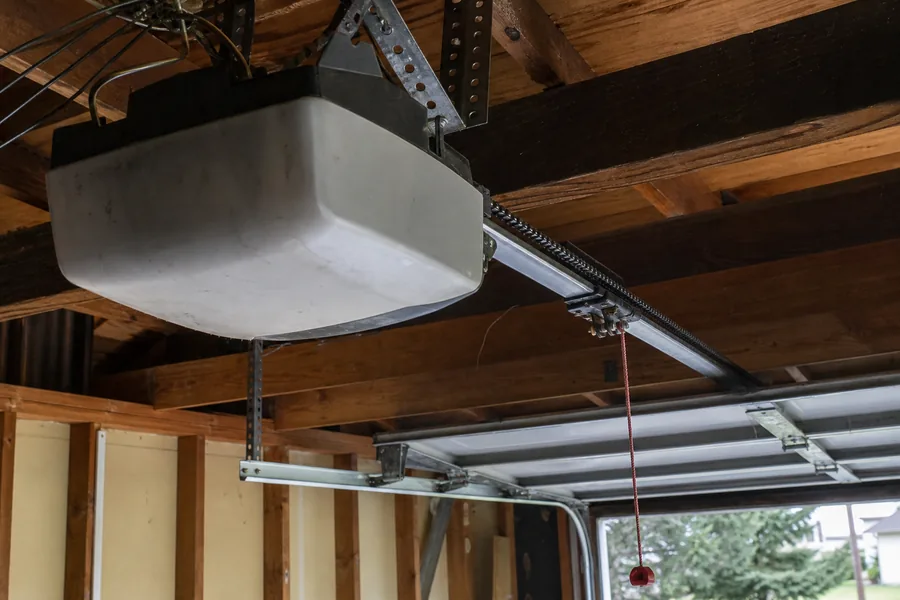
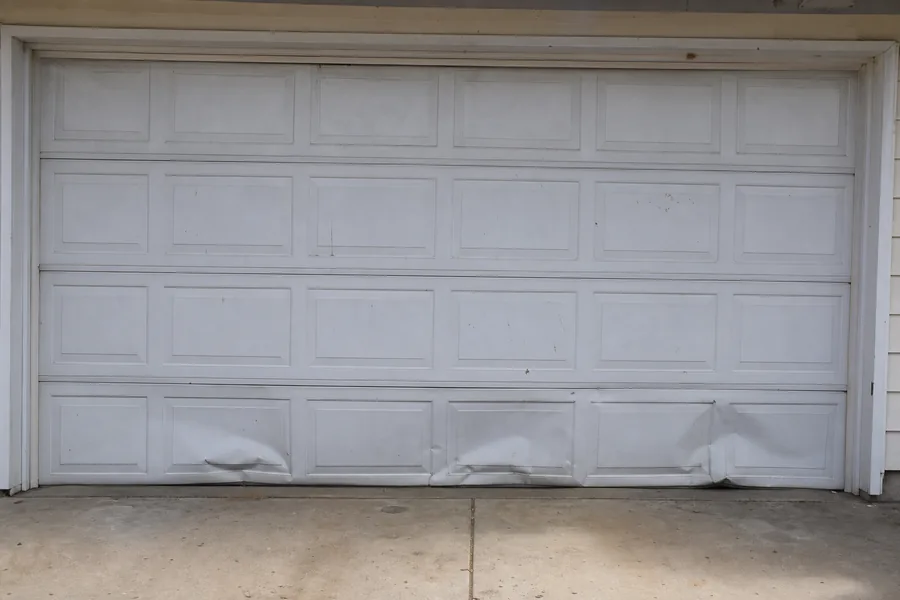
Once a spring has gone, the opener is trying to lift dead weight. Pull its plug and let the door stay where it stopped. If it stopped open, don't disconnect it from the opener; with no spring holding it, the door comes down hard.
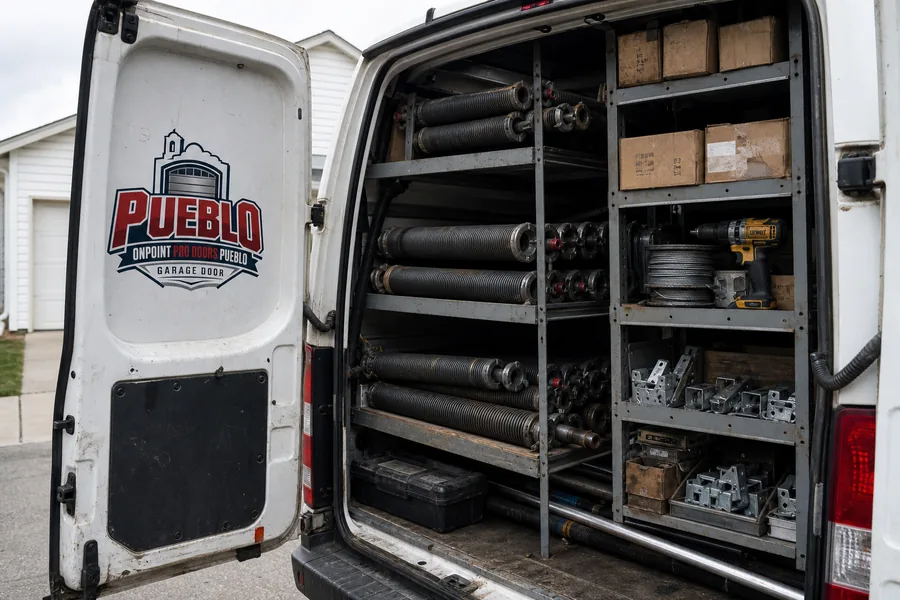
Out on the bigger lots west of town, plenty of properties have a shop or an RV garage with a tall door, sometimes insulated and often far heavier than a house door. Those doors need larger springs, heavier cables and bigger drums, and a spring that's undersized for one fails early and takes the cables with it.
They're sized the same way as any house door: springs off, the door's weight measured, and a pair wound to carry exactly that weight. For a door that opens many times a day, longer-cycle springs are worth hearing about, and the choice is yours.
The visit, in the order it happens.
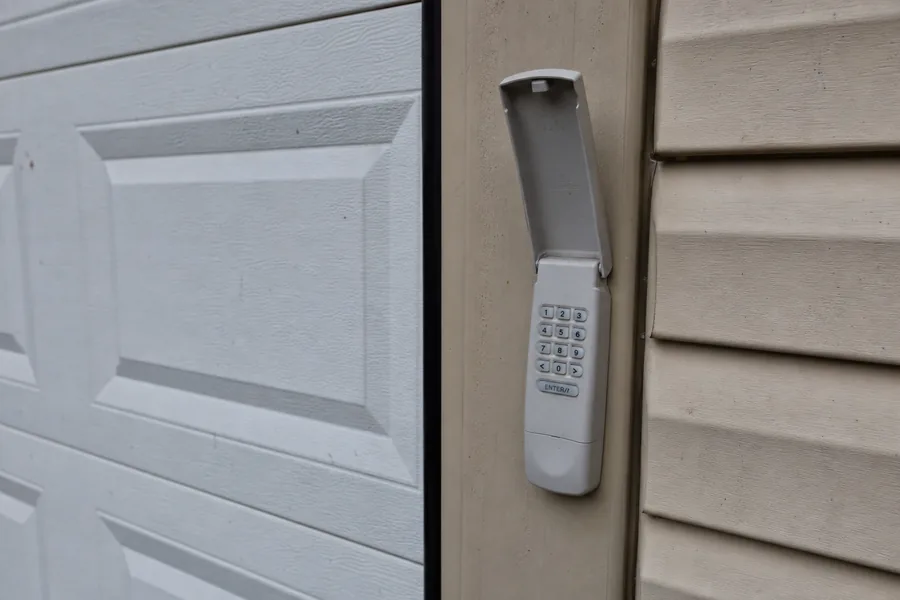
Hard sun cracks the rubber bottom seal and dries out nylon rollers, and the wind packs dust into the tracks. None of that breaks a spring on its own, but it makes the door heavier to move, so the springs work harder on every cycle. With the springs off, those parts are easy to check, and each one appears on the estimate as its own line if it needs replacing.
A fresh bottom seal also keeps the wind-blown dirt out of the garage, which is half the reason the tracks get gritty in the first place.
Springs usually give some warning. The door feels heavier than it used to when you lift it by hand, it won't stay put halfway, the opener has started to strain or slow down near the top, or the last foot of travel ends with a thump because nothing is holding the door back anymore. Sometimes you can see it: rust blooming along the coil, or a gap opening between two windings.
Any of those is a reason to book a daytime visit now rather than wait for the morning the door won't open and the car is shut in behind it.
Belmont, Sunset Park, Bessemer, Mesa Junction, the Northside and El Camino, and the towns around them: Pueblo West, Avondale, Boone, Colorado City, Rye and up toward Fountain. The common spring sizes ride on the truck every day.
Give us the street and you get a window that holds.
Weighed, not guessed. The door's weight picks the spring.
Both at once. Two springs that went up together are replaced together.
Opener second. A straining opener usually means the springs are the problem.
Tested before we leave. Lifted by hand, run on the opener, and stopped by an object in its path.
Summer does the wearing: heat thins and then dries the grease, and dust sticks to it. The winter cold snaps finish off springs that are already worn.
Those are extension springs. They're replaced as a matched set, and each one gets a safety cable through its center.
Yes. Taller and heavier doors get larger springs, cables and drums sized to their measured weight.
No. A door without its spring carries its full weight and can come down fast. Leave it where it stopped and call.
One visit, in most cases: the pair goes on, the door is balanced, and it's tested before the truck pulls away.
Yes, and you have it in writing before anything is replaced.
One call, a two-hour window, and a call ahead from the technician. That's the routine across Pueblo, Sunset Park and Pueblo West.
Free estimate. Throughout Pueblo County, including Belmont, Sunset Park, Bessemer, Pueblo West, Colorado City, Avondale, Boone, Rye, Fountain.
Describe it and you'll hear an honest opinion on whether it's a today job or not. Free estimate wherever you are.
Would rather call? Call (719) 662-8141.
Tell us what the door is doing. Free estimate, written down, before the first tool comes out.