
Two things wear out cables and rollers faster here than almost anywhere: fine grit carried on the wind, and garages that bake all summer. Grit sticks to whatever grease is left and turns it into grinding paste. When a door starts to hang crooked or growl, stop using it and call. The estimate is free.
Tell us what the door is doing. Free estimate, written down, before the first tool comes out.
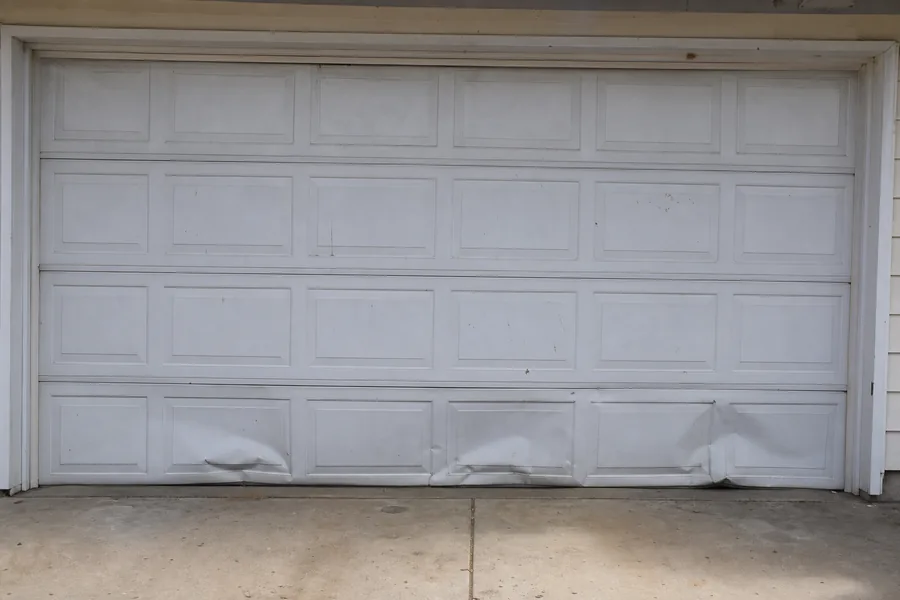
Every windy afternoon pushes dust under the door and into the garage, and some of it settles on the moving parts. On the cable drums it packs into the grooves the cable winds into. On pulleys it lodges in the bearing. Anywhere there's old grease, it sticks and becomes an abrasive paste. Cables running through that wear thin in one spot, rollers grind, and the door gets louder month by month. Dented, creased or hail-pocked sections are handled on garage door panel replacement.
A cable that has worn thin where it meets a gritty pulley or drum looks fine from a few feet away and parts without warning. That's why every cable call here includes the drums and pulleys, not just the cable.
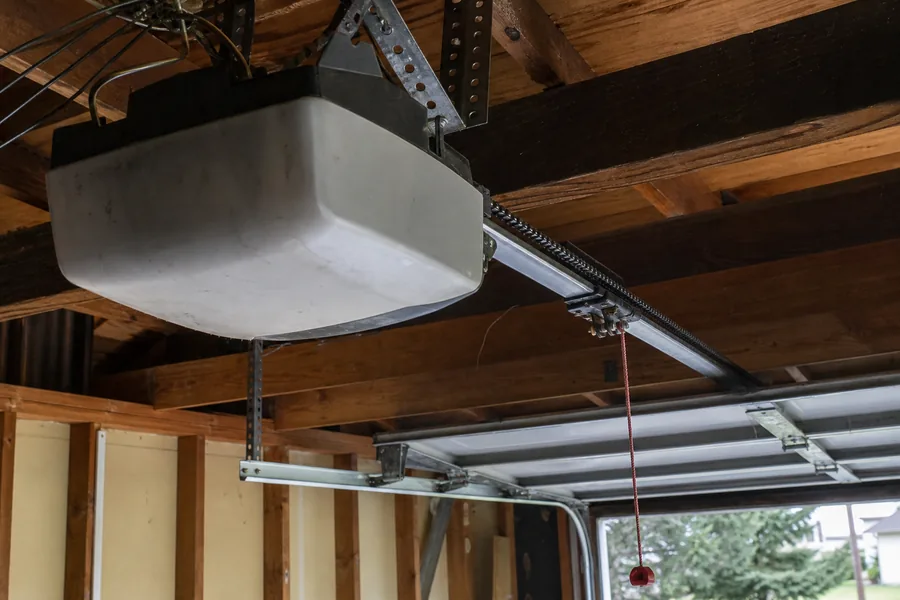
A closed garage on a July afternoon gets hot enough to thin the grease in every roller bearing until it runs out, and what's left dries into a crust. Plain steel rollers go first; they start to squeal, then to drag, and a dragging roller makes the whole door work harder and the opener with it.
Sealed-bearing nylon rollers hold their lubricant in and keep grit out, which is exactly what this climate needs. Swapping a full set, both sides, is a short job that changes how the door sounds and moves right away.
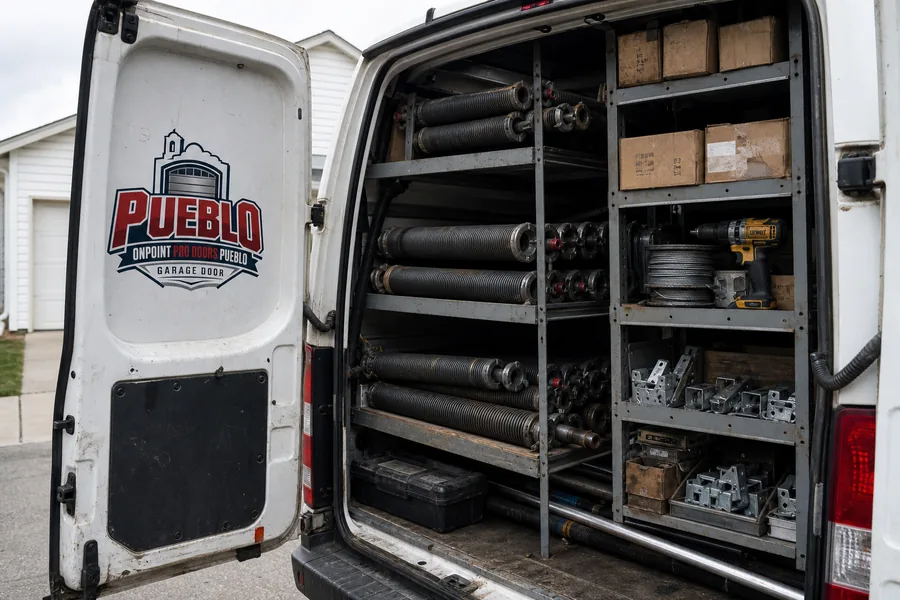
Bigger lots often have a shop or an RV garage with a door ten, twelve or fourteen feet tall. Taller doors use longer cables and larger drums, and a door that size hanging from one cable is a hazard to anyone near it. Their cables and drums are matched to the height and weight of that door, and the spring load is set to it afterwards.
Those doors also see heavier traffic in some seasons than others. A door that sits closed all winter and then opens daily in spring gets its cables and rollers looked at before the busy months if you ask.
It runs in this order every time.
The older homes near downtown often have a detached garage out back with an extension-spring door: springs stretched along the tracks and cables running over pulleys. On those, the pulleys are replaced along with the lift cables, and each spring gets a safety cable run through it. A spring breaking without a safety cable can throw pieces across the garage.
Older wood doors get weighed on the visit. Wood dries and shrinks here, and a door that has changed weight over the years needs its springs set to what it is now.
A wedge of daylight under one corner when the door is shut. A cable that looks thinner or frayed where it meets the bottom bracket. A grinding sound near the top of the tracks where the rollers turn the corner. A door that jerks as it starts to rise. Any one of those is easier to fix before it becomes a door hanging on one side.
Stucco and brick ranches in Belmont, Sunset Park and the El Camino area, detached garages near downtown and in Mesa Junction and Bessemer, and shops and RV garages toward Pueblo West. Colorado City, Avondale and Boone are covered too.
Tell us the street and we'll give you a window we can keep.
Cables in pairs. One new and one old lifts unevenly.
No work under tension. The springs are relaxed first.
Grit dealt with. Worn drums and pulleys replaced, not ignored.
Balanced before leaving. Checked by hand and on the opener.
Almost always the rollers: dry, gritty bearings dragging in the track. Sealed-bearing rollers put a stop to it.
The cable on that side has stretched or slipped on its drum. Park the door and call before that cable gives out.
Yes. Longer cables and larger drums are matched to the door, and the springs are set to its weight.
A good bottom seal and sealed-bearing rollers do most of it. The technician can replace both on the visit.
Yes, sectional and rolling doors on shops, storage buildings and warehouses.
Yes; it's written up and yours to accept or not.
No. Grease on the tracks collects grit and makes things worse. The hinges, rollers and bearing plates get a light lubricant; the tracks stay clean and dry.
Phone us or fill in the form with the street and what's happening; a picture of the door's bottom corners saves time. The technician calls when on the way.
Free estimate across town and out to the county roads.
Describe it and you'll hear an honest opinion on whether it's a today job or not. Free estimate wherever you are.
Would rather call? Call (719) 662-8141.
Tell us what the door is doing. Free estimate, written down, before the first tool comes out.