
Once a door leaves its tracks it's only partly supported, and the springs above it are still loaded. It can drop or swing without much warning. Unplug the opener, keep clear of the door, and call. It's braced, put back and balanced, and the estimate is free.
Tell us what the door is doing. Free estimate, written down, before the first tool comes out.
Dust that blows under the door settles in the lowest part of each track, where the rollers sit when the door is closed. Over a season it packs down into a ridge. The rollers have to climb it every time the door starts to move, and one day one of them climbs a little too far and hops out of the channel. The door then rises crooked, binds a few feet up, and stops. Grit in the bottom of the track is one reason doors leave it, and clearing it out is part of every garage door tune-up.
Cleaning the tracks out and replacing worn rollers usually settles it, but only after the door is safely back where it belongs. A door that has already jumped once on a packed track will do it again if the ridge is left.
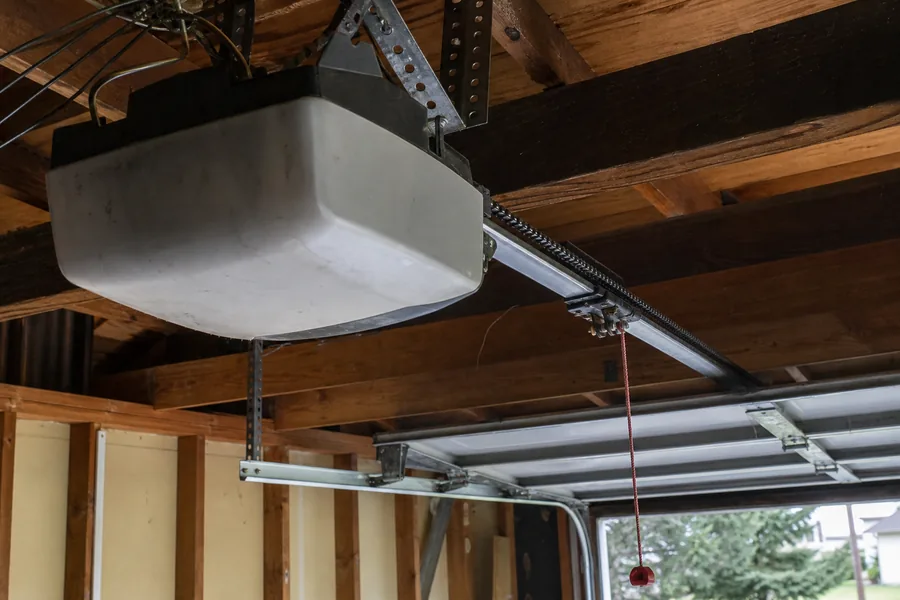
Unplug the opener so it can't keep pulling, and don't use the red release; on a crooked door the opener's arm may be part of what's holding it. Keep people, pets and cars away from it.
Can't get the garage shut? Mention it first on the call; open garages are handled ahead of everything else, and the door is secured before any repair is planned.
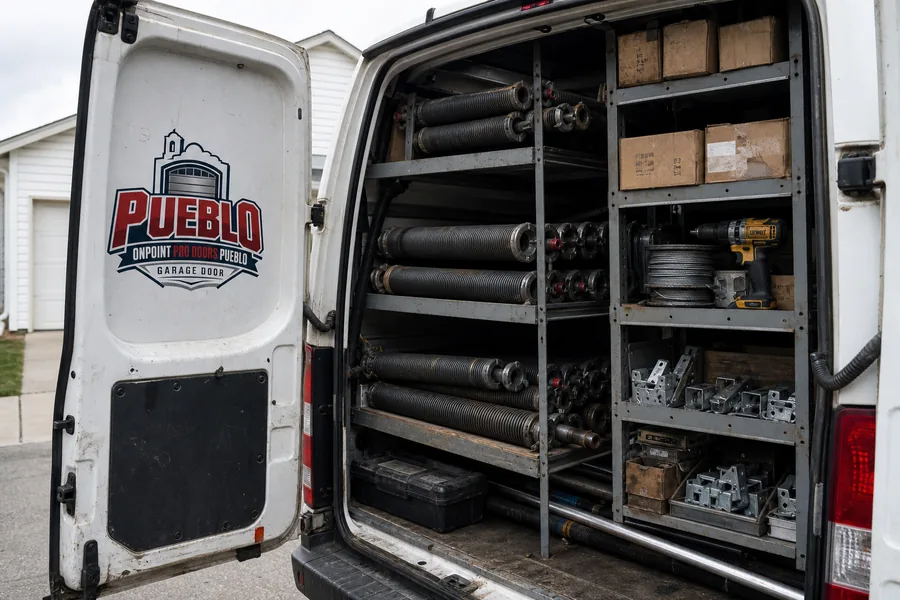
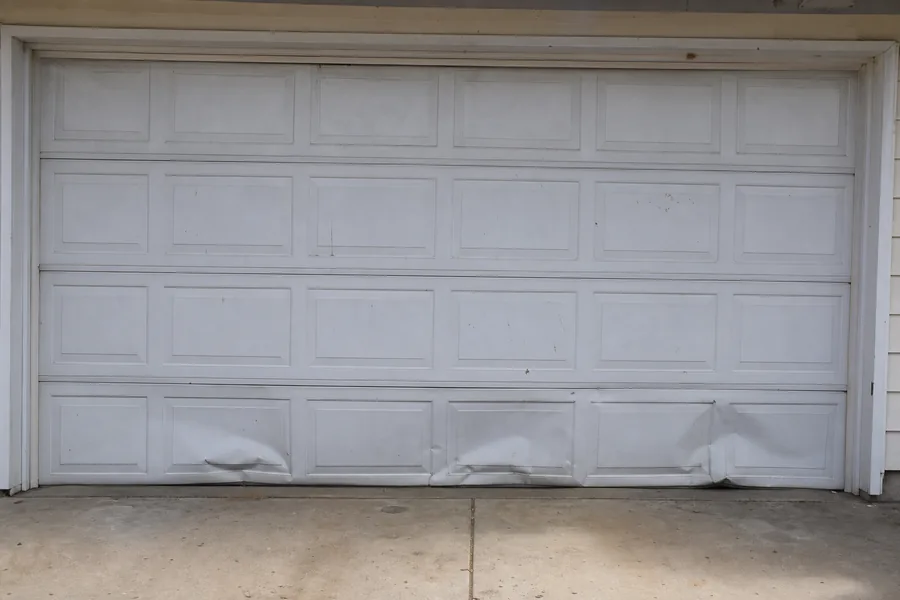
Shops and RV garages on the bigger lots take a beating from whatever backs into them. A trailer hitch or a bumper catching the bottom of a tall door bows the lower sections, and on a door that size the rollers on a bowed section don't stay in the channel. The bent section and the track beside it both get looked at, because straightening one without the other just moves the problem.
Tall doors are braced from the ground and the side before any work starts. They're heavy, and the springs above them carry a lot of stored force.
Every off-track door, in this order.
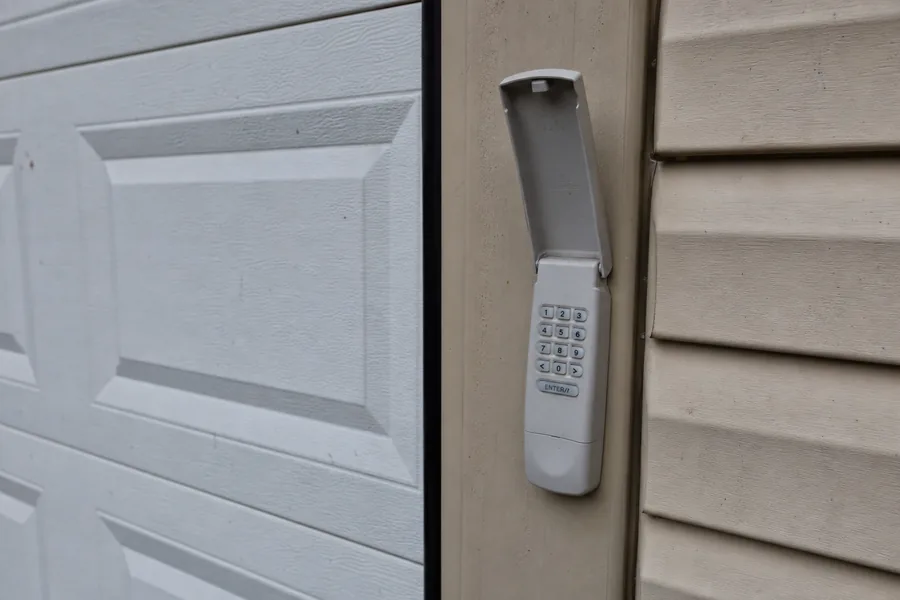
The detached garages behind older homes near downtown are framed in wood that has spent decades in dry heat and cold snaps. Screws holding the track brackets loosen as the wood dries and cracks around them, and a track that has drifted even slightly outward lets the rollers slip. Tightening the same screws doesn't last.
New blocking behind the brackets, or longer screws into solid studs, keeps the track put. If the jamb has split, that's on the estimate as a separate line.
A door that has come off its track has usually strained something on the way. Before the technician leaves, the cables are checked where they took the load, the hinges on the damaged section are checked for cracks, and the weatherstrip along the sides, which bakes and warps in the sun here, is checked for dragging on the door. Anything that needs attention is listed, so it doesn't turn into the next call.
Most repeat off-track calls here come down to the same few things: grit left in the track, rollers that are past it, and tracks that were never braced. A clean, dry track, sealed rollers and a bottom seal that keeps the dust out do most of the prevention. The technician also points out anything stored against the tracks, like bikes or shelving, that can nudge them out of line over time.
Brick and stucco ranches in Belmont, Sunset Park and El Camino, older garages in Mesa Junction, Bessemer and the Northside, and shops toward Pueblo West. Colorado City, Avondale and Boone are on the route as well.
Give the street and you'll get an arrival window we stick to.
The rehang. Door put back and tracks aligned and fastened.
Track repairs. Cleaned, trued or replaced.
Rollers. Sealed-bearing replacements if the old ones are worn.
Section or bracket work. Each named with its reason.
Unplug the opener and keep clear. It gets braced, the springs relaxed, and then it's put back and balanced.
Often a ridge of packed grit at the bottom of the track, worn rollers, or a track that has drifted outward. All three are fixed on the visit.
The bowed sections and the tracks are checked together. Straightening one without the other doesn't hold.
Better not. Loaded springs and a half-supported door are a bad combination; wait for the technician.
Yes: storage units, shops and warehouses, sectional or rolling.
Always, and you see it on paper before the work.
No. Grease in the tracks holds grit and makes the problem worse. Rollers, hinges and bearing plates get a light lubricant; the tracks stay clean and dry.
Phone or send the form with the street name, and mention it if the garage won't close. You get a window and a call before the technician arrives.
Free estimate in town and out in the county.
Describe it and you'll hear an honest opinion on whether it's a today job or not. Free estimate wherever you are.
Would rather call? Call (719) 662-8141.
Tell us what the door is doing. Free estimate, written down, before the first tool comes out.